A Guide for Parents and Caregivers
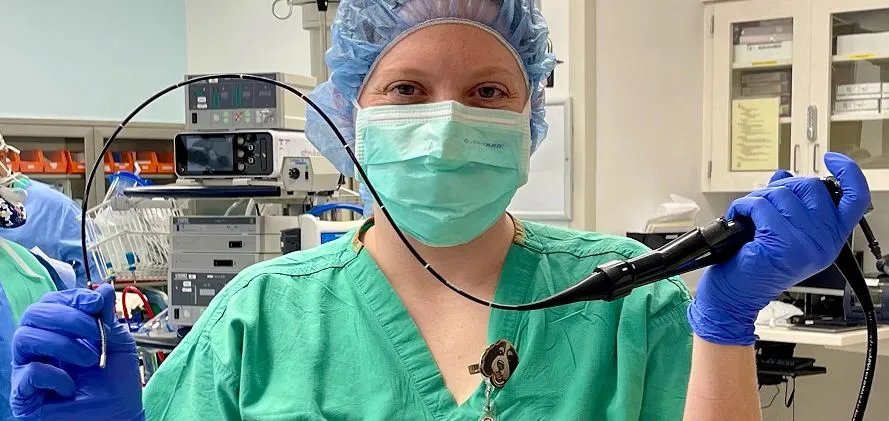
A bronchoscopy is a procedure where a doctor uses a small camera to look inside your child’s airways. The airways are the tubes that carry air into the lungs. The camera lets doctors see these tubes up close.
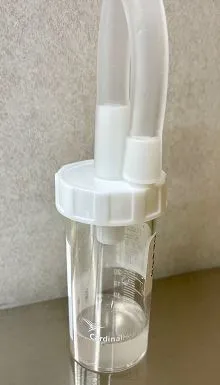
There are two main types:
What to Expect Your child will be given medicine (sedation or anesthesia) so they sleep and feel no pain during the procedure. The procedure usually takes 30 to 60 minutes. Getting ready and waking up takes extra time. Your child should not eat or drink before the procedure. Your team will tell you exactly when to stop. Afterward, your child may cough more than usual for a short time. Their oxygen levels may be slightly low for a bit. Your child will be watched in a recovery area until they are fully awake and breathing well.
BAL stands for bronchoalveolar lavage. You may hear it called a “lung wash.”
A BAL is almost always done at the same time as a flexible bronchoscopy.
The doctor guides the camera to one part of the lung. They send in a small amount of clean salt water. The water flows deep into the tiny air sacs (alveoli — the spots where oxygen enters the blood). Then the doctor gently suctions the water back out. The water picks up cells and other material from deep inside the lungs. This fluid is sent to a lab for testing.
Why a BAL Is Done for Children with chILD
- Many lung infections look just like chILD on an X-ray or CT scan. A BAL helps rule out infection.
- BAL results can help identify the type of chILD.
- It gives information that helps doctors decide on the best treatment.
- A BAL is much less invasive than a lung biopsy (surgery to remove lung tissue).
A bronchoscopy with BAL is generally safe. But all procedures have some risk. Your care team will explain these before the procedure.
Common short-term effects after the procedure:
Serious problems are not common but can happen. These include heavier bleeding, infection, or a reaction to the anesthesia.
Call your team if your child has:
Questions to Ask Your Child’s Care Team
- What do you hope to learn from this bronchoscopy?
- Will a BAL be done at the same time?
- Who will give the anesthesia?
- How long will results take?
- What will the next step be based on the results?
- When can my child go back to normal activities?
Alveoli — Tiny air sacs in the lungs where oxygen passes into the blood
BAL (Bronchoalveolar Lavage) — A “lung wash” used to collect cells and fluid from deep in the lungs
Bronchoscope — The thin, flexible camera used during bronchoscopy
chILD — Childhood interstitial and diffuse lung disease
Pulmonologist — A doctor who specializes in lung conditions
Sedation or anesthesia — Medicine that helps your child sleep or stay still and comfortable during a procedure
More Information — American Thoracic Society: Flexible Bronchoscopy
This information is for educational purposes only. Always talk to your child’s doctor about your child’s care.
