Pulmonary function tests (PFTs) are the main way to measure lung function. Several different types of tests can be done:
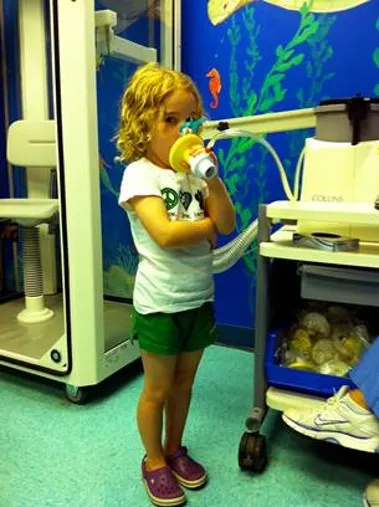
Spirometry: This measures how much air is breathed in and how well air moves in and out of the lungs. It can help find obstruction (blockage) in the airways. Sometimes a medicine (albuterol) is given to see if it helps the airways open. This test can help doctors diagnose things like asthma or bronchiolitis obliterans.
Plethysmography (lung volumes): This measures how much air the lungs can hold. This test can help doctors measure lung stiffness or air trapping.
Diffusion capacity (DLCO): This measures how well the lungs can move oxygen from the air sacs (alveoli) to the bloodstream. Extra inflammation or scarring in the lungs can cause this number to be low.
6 Minute Walk Testing (6MW): This test measures how far your child can walk in 6 minutes. It measures their heart rate and oxygen levels every minute to make sure oxygen levels don’t drop during exercise. Sometimes kids with chILD will have normal oxygen levels at rest, but oxygen levels drop during exercise.
Infant PFTs: Some hospitals are able to do PFTs on babies. This testing can measure spirometry and lung volumes.
This information is for educational purposes only. It should not be used as a substitute for the medical advice of one’s healthcare provider.
